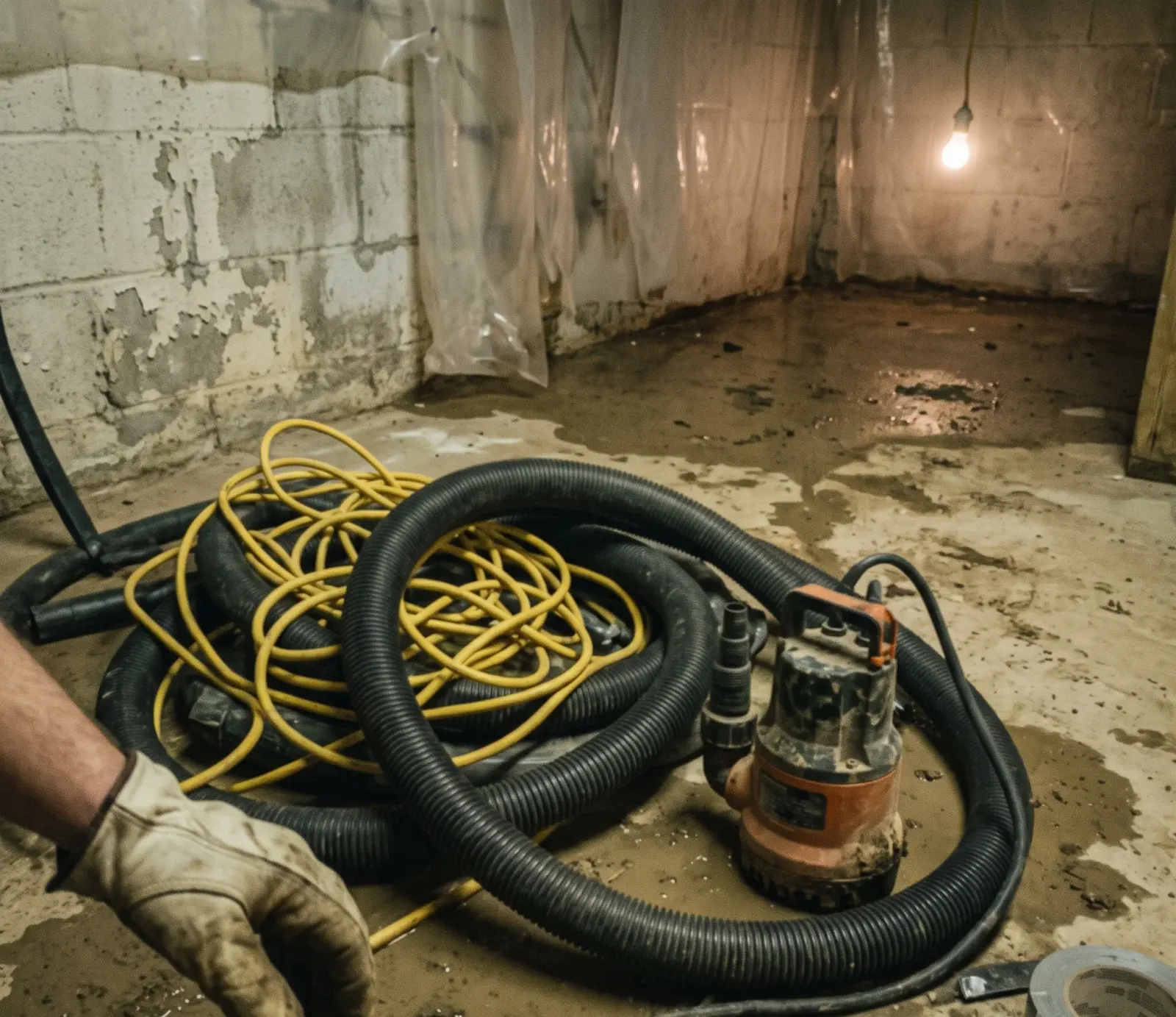
Submersible Pump Setup for Spokane Valley Properties
A submersible pump sits in the pooled water and moves it through a discharge hose when depth and volume suit the equipment.
An underwater pump moves water through a discharge hose; crews choose it for a deep pool that keeps its intake submerged and needs steady removal. In Spokane Valley, depth, debris, and a workable outlet matter more than whether a property is near CenterPlace, Mirabeau Point Park, or Sullivan Park; compare those conditions with the pros we connect you with.
How Submersible Pumps Move Water
A submersible pump is designed to operate with its pump body underwater, moving water through a hose to an outlet. In Spokane Valley, the pros we connect you with may choose one when a deep pool cannot be cleared efficiently with a wet vacuum. The decision starts with how far the water rises above the floor, then how much water must be moved and whether it can be discharged safely. The pump handles pooled water; it does not establish what caused the intrusion or whether the building is dry afterward.
Depth and volume answer different questions. A deep water column may cover the pump intake and allow steady operation, while a larger footprint can add substantial water even when the level looks modest. In Spokane Valley, a provider can estimate both by checking the water line and the area it covers before selecting equipment. These observations help explain why two rooms with similar-looking water levels may call for different pump capacity or run time.
The sound and movement of water also matter during assessment. If water is visibly flowing from one part of the floor toward a low point, that may affect where a pump can sit and how the hose can be routed. In Spokane Valley, the pros we connect you with can note whether the water level is steady or changing while they plan placement. A pump choice should account for those conditions, rather than relying on a single reading taken at arrival.
Depth and Volume Shape Pump Use
Placement begins with a stable surface and a clear path for the intake. Boxes, loose flooring, or objects hidden below cloudy water can make a location unsuitable or restrict the pump as it runs. At a Spokane Valley property, a provider may need to shift belongings or choose another low point so the equipment stays upright and accessible. The owner should not wade in to clear a spot when electrical safety or the floor condition is uncertain.
A discharge hose must lead to a destination that can accept the water without sending it back toward the building. Its route can involve doorways, stairs, or a long stretch across the property, and each turn affects where the pump can be positioned. For a Spokane Valley estimate, ask what outlet location is assumed and whether the planned route is workable at the site. The appropriate destination depends on the property and local conditions.
Grit, leaves, and fragments in the water can clog or damage an intake. A pump intended for clearer water may be a poor fit when debris is visible, so the provider should examine the water before running equipment. In Spokane Valley, this check can change the method or require debris to be cleared first. Some fine sediment may remain after pumping and need to be cleaned up separately.
Plan the Hose and Discharge Point
As the waterline drops, a pump may reach a point where it cannot draw the thin layer remaining on the floor. The visible pool can be mostly gone while corners, shallow depressions, or the edge of a stair landing still hold water. In Spokane Valley, ask what method is planned for these low areas and whether that work is included. A final walkthrough can help spot water hidden by furniture or floor transitions.
Before anyone enters a flooded room, check whether outlets, appliances, or wiring could be wet. Standing water near electrical equipment can be dangerous, and a pump needs a safe power arrangement to operate. If the owner cannot tell whether the area is safe, keep out and seek qualified guidance. In Spokane Valley, the pros we connect you with should account for access and power before placing equipment; do not touch a submerged device or switch.
Know the Pump's Working Limits
When reviewing estimates, compare the conditions each one assumes: measured water depth, affected footprint, pump location, expected discharge route, and how remaining shallow water will be handled. For a Spokane Valley home, a written scope can make differences between proposals easier to spot. Ask whether moisture checks or drying equipment are included as separate work, and keep a copy of the water-removal documentation to share with an insurer if needed.
During operation, the pump's sound and the visible waterline give the owner a simple way to follow progress from a safe area. If the level changes little, the provider may need to reassess placement, hose flow, or the pump's fit for the conditions. In Spokane Valley, ask how progress will be recorded and what would prompt a change in method. That discussion clarifies the work plan without treating pump run time as proof that materials have dried.
Pump Plan Details to Review
- Record the waterline and affected floor area before comparing pump capacity or proposed run time.
- Confirm the pump location, safe power plan, hose route, and intended discharge destination.
- Ask how debris, shallow pockets, moisture checks, and drying are handled in the written scope.
- Record the water line at several points before placement; uneven depth around a Spokane Valley basement can affect where a pump operates effectively.
- Ask how the estimated volume and the water level expected during removal influence pump choice, run time, and when another method may be needed.
- Confirm the discharge destination and hose path before work begins, including whether the route can stay clear of doors, walkways, and other work areas.
Extraction FAQs
When would a crew choose a submersible pump for deep water?
The pump needs open space around its intake so water can flow into it during operation. They also check for a stable placement point, a safe power arrangement, and a suitable discharge destination. In Spokane Valley, the pros we connect you with can compare those conditions with the water's depth and footprint before choosing the method.
How do crews decide where the pump's discharge hose goes?
A pump may stop drawing effectively when the remaining water is too shallow for its intake. A wet vacuum or another suitable method can address water left along edges or in low spots. Ask the provider whether that follow-up is included in the estimate. After visible water is gone, moisture in building materials may still need assessment and separate drying.
Can a submersible pump remove shallow water or debris?
The hose should carry water to a suitable destination away from the structure, with a route that does not create a return flow or another property problem. The provider can explain the planned outlet and any limits at the site. In Spokane Valley, have the route and destination stated in the work scope so the estimate reflects the actual setup.
Compare Depth, Volume, and Route
Share the measured depth, affected area, and available discharge route with the pros we connect you with to compare pump plans for Spokane Valley.
Call (509) 800-4628