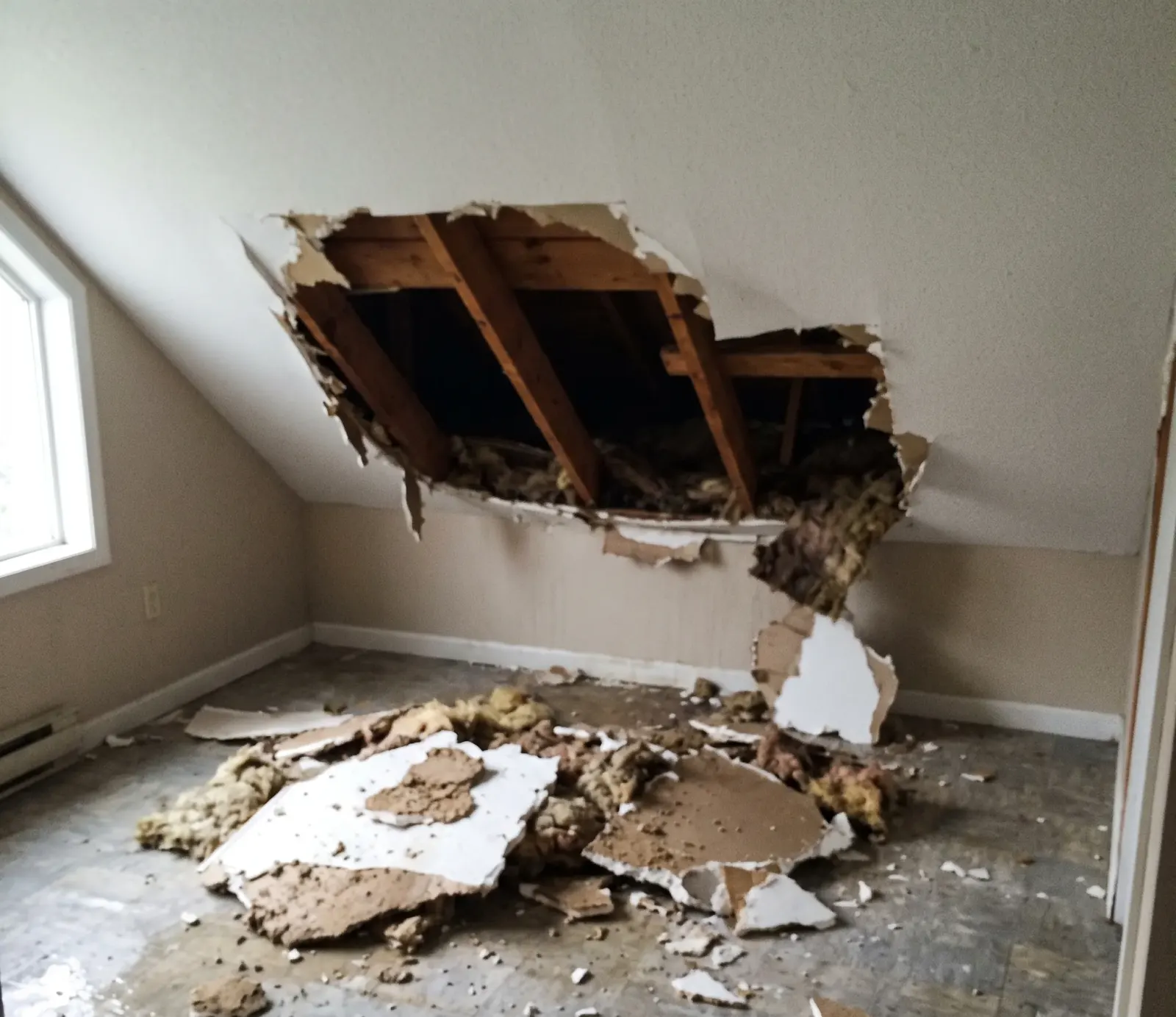
When Water Calls for Immediate Action
In Spokane Valley, seasonal winter freezes are one local factor to mention when rain later appears through a roof opening; water may show on a ceiling or carpet below, away from the entry. A home near U.S. Route 2, Greenacres Park, or Mirabeau Point Park still needs its own wet-area check; nearby landmarks do not establish exposure.
A home near U.S. Route 2 or Highway 290 still needs its own roof and interior assessment; road location does not establish water risk. Spokane Valley residents can use Mirabeau Point Park or CenterPlace as familiar directions when describing where a home is.
Emergency water extraction inquiries can involve homes across Spokane Valley and Spokane, while service availability depends on the property’s location. Give the pros we connect you with the street address so they can check whether that specific site falls within their service area.
Separate Repairs from Removal
- COST DETAILS
- The entry location and visible wet areas help define which interior surfaces are candidates for accessible water removal.
- ENTRY POINT
- Carpet and its pad can require separate review because a dry-looking surface does not settle the condition below.
- AFFECTED SURFACES
- Ceiling marks, floor pooling and wet carpet describe different surfaces and may need distinct work scopes.
- REACH
- Extraction removes reachable standing water; concealed moisture, roof repairs and rebuilding need separate assessment or work.
- WHAT TO REPORT
- In Spokane Valley, roof-leak water removal can lift pooled water from accessible carpet and pad; a ceiling stain alone does not show whether overhead materials hold water.
- Water Source
- Spokane Valley has cold-season freezing conditions as well as rain. A roof leak may become apparent during wet weather or after a freeze and thaw; the season does not show which interior surfaces can be extracted. Inspection must establish the affected rooms and materials.
- WATER TYPE
- an estimated $400–$2,000
Recording Details Before Work Begins
Roof repair. It addresses the opening that lets rain into the building, while extraction removes reachable water from interior surfaces. Spokane Valley homeowners may need both scopes, but one does not automatically include the other. Check the written work scope and invoice for the rooms and surfaces covered. Carpet and pad extraction describes indoor water removal; roof work describes a separate exterior repair. A Spokane Valley homeowner can ask which task is included before work begins.
Setting the Scope for Water Removal
The pro records the apparent roof entry, affected rooms and floor surfaces, then checks which areas have accessible standing water. If it can be done safely, limiting further rain entry comes before indoor removal. This first review sets boundaries for carpet and pad water extraction and identifies surfaces that need separate assessment.
Accessible water is collected from affected flooring with a pump or wet vacuum chosen for the conditions. Carpet and pad may need distinct attention because the surface does not reveal everything held below it. The pro can then document remaining concerns; moisture assessment, drying, roof repair and finish work may be separate scopes.
One visit may cover a small, accessible area where standing water can be removed directly. A broader intrusion may need a staged plan if damp materials remain after extraction. Before work starts, have the owner confirm which steps address pooled water and which, if any, continue into drying.
PUMPING OUT POOLED WATER VERSUS REDUCING HIDDEN MOISTURE
| Equipment Used |
Early Action |
|---|
| Water spread across rooms or hallways | Pump or wet-vac work |
| New water gathers where floors were cleared | Water removal only |
| Water crossing room boundaries | Pooled water extracted; materials left to dry |
PAYMENT PROCESSKeep copies of estimates, authorizations and messages that describe the work. If roof repair or rebuilding is proposed, ask whether that work falls within a registered contractor's scope. Request an invoice that identifies water removal, affected areas and any work listed separately.
Where Dampness Can Remain
Rain left on carpet can soak into the pad and affect nearby flooring or finishes, expanding the area that needs review. If removal is delayed, visible pooling may disappear while damp materials remain. Cleanup can then involve separate flooring assessment, drying and repairs; roof work is also needed to address the entry point.
Keep Occupants Clear of Wet Rooms
Keep household members away from wet rooms, especially where outlets or appliances may be affected. From a dry, safe location, note where rain entered, which floors feel wet and whether dripping continues; photos can help explain the layout. In Spokane Valley, do not cross standing water if electrical safety is uncertain or approach a sagging ceiling.
What Happens During Water Removal
Keep people out of rooms where water is near outlets, appliances or wiring; wet electrical equipment can make a floor unsafe to cross. A sagging ceiling also calls for distance because soaked material may loosen or fall. In Spokane Valley, report these conditions before anyone enters to remove water. If safety is uncertain, wait for qualified help to assess the area.
What The Initial Removal Step Covers
Identify which spaces contain water, how much remains, access limits, and machinery needed; have the pros we connect you with provide a written scope and estimate.No verified Spokane Valley price band is available; any guide should serve only as a reference for extracting water from the stated area. It excludes leak repair, contaminated-water cleanup, and later drying. For a home near Otis Orchards Library, ask the pros we connect you with to confirm visit charges and included work in a written estimate.Review pricing guide for the full cost range; Carpet and Pad Water Extraction explains urgent removal when water remains on the floor.