How Delay Changes the Work Ahead
Spokane Valley’s covered residential areas extend around CenterPlace and along U.S. Route 2. A condensate spill can happen wherever a home’s indoor air conditioner collects water, so the local service area is relevant without implying that nearby river conditions caused a particular loss.
Spokane Valley has seasonal winter freezing potential, while an air conditioner produces condensate when it is cooling. A homeowner who finds water near the indoor unit can report whether cooling was underway, helping keep the likely equipment source distinct from other causes.
Emergency water extraction inquiries can involve homes across Spokane Valley and Spokane, while service availability depends on the property’s location. Give the pros we connect you with the street address so they can check whether that specific site falls within their service area.
Separate Repairs from Removal
- SOURCE
- Condensate forms during air conditioning and should leave the indoor unit through its pan and drain.
- SHUTOFF
- Water near the air handler is a clue, but it does not identify which part let water escape.
- REACH
- A ceiling mark below an upstairs unit may point to water above the visible finish; leave the surface untouched.
- SURFACE
- Extraction removes reachable standing water; dampness can remain in building materials afterward.
- NEXT CHECK
- CenterPlace and Highway 290 help orient a Spokane Valley service-area inquiry; give the property address for location checks.
- Claim Records
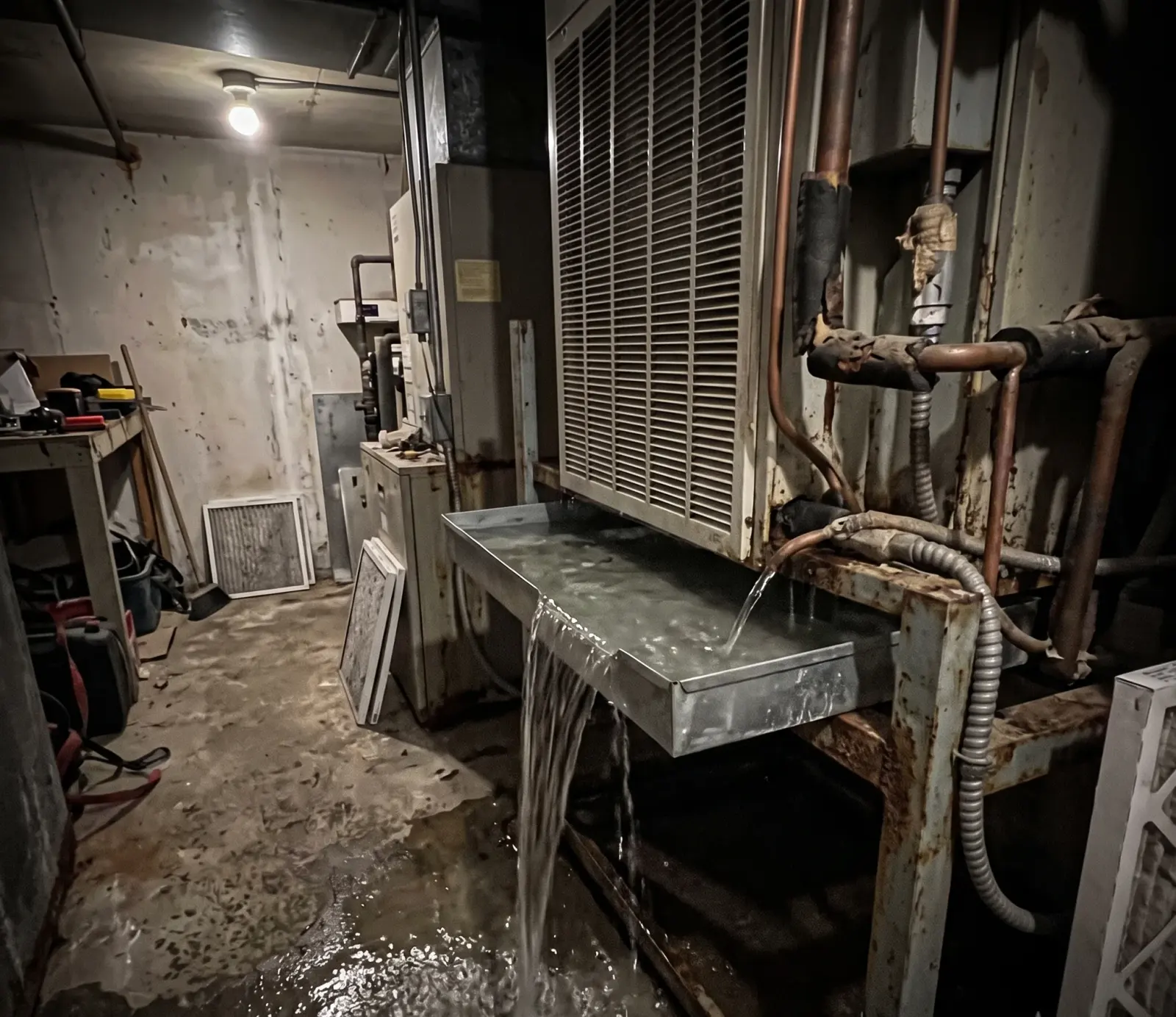
- During Spokane Valley’s cooling season, an operating air conditioner produces condensate that should drain away from the indoor unit. If water appears near the unit, note whether cooling was underway; winter freezing potential is local context, not proof of the spill’s cause.
- MATERIALS
- an estimated $800–$2,400
Recording Details Before Work Begins
Rain intrusion can leave a ceiling stain or wet floor that resembles an air-conditioner overflow. Rain follows wet weather; condensate is associated with cooling operation, so note the timing and whether the first visible water was near the indoor unit. Compare the timing and location of the first water. Condensate overflow is associated with an operating air conditioner and the indoor unit; rain intrusion follows wet weather and may show elsewhere. Tell the provider whether the stain appeared during cooling or after rain.
Electrical Conditions Around Wet Areas
For a home near Highway 290, the pros we connect you with check the pan, visible drain opening, and spill marks to identify where the overflow escaped. They then collect pooled water from accessible flooring or ceiling finishes and note which areas were reached. Repairing the pan or condensate drain is separate work.
The licensed pros we connect you with can identify which materials got wet before choosing a drying approach. Work may include floor areas or accessible ceiling finishes. The provider can explain whether a moisture assessment is included; removing visible water does not establish that every affected material is dry.
A straightforward extraction can be a one-visit task when water is confined and reachable. If the affected area is extensive or moisture remains in building materials, further assessment and drying may be needed. Moisture readings help identify which surfaces may need attention after visible water is removed.
WHICH WORK ADDRESSES VISIBLE WATER AND WHICH ADDRESSES DAMP MATERIALS
| Equipment Used |
Early Action |
|---|
| Indoor water accumulation after a leak | Water-work records |
| Pooled water returns after pump-out | Drying may follow |
| Wet floors beyond a single room | Standing water pumped; drying gear positioned |
Trace the Water's Entry Point
From a dry, safe spot, switch off the air conditioner if its control is easy to reach. If the control is not safely reachable, leave the unit alone and step back from the wet area. Note whether the unit was running. Do not handle wet HVAC equipment, wiring, or a ceiling that looks weak.
What Happens During Water Removal
A drip at an indoor air handler can be a nuisance until water reaches powered HVAC parts or a ceiling light. In Spokane Valley, note whether the wet area is beside the unit or below it; if the system can be shut off from a dry, safe spot, do so. A spreading stain or water at wiring shows the spill has moved beyond the pan.
Where Extraction Work Starts After Intrusion
Explain where standing water reached, its depth, entry constraints, and removal gear required; ask the pros we connect you with to document their estimate.No verified Spokane Valley price band is available; any guide should serve only as a reference for extracting water from the stated area. It excludes leak repair, contaminated-water cleanup, and later drying. For a home near Otis Orchards Library, ask the pros we connect you with to confirm visit charges and included work in a written estimate.Use pricing guide to compare complete cost ranges, then visit Subfloor Water Extraction for urgent removal of pooled water.